
Insights
Selecting the Right Partner for Complex Sterile Advanced Therapies
As advanced therapies continue to transform modern healthcare, the demands on sterile manufacturing partners have become increasingly complex. Novel modalities such as gene therapies and highly specialised injectables often require aseptic processing conditions that go far beyond conventional manufacturing approaches.
For outsourcing companies, this brings a significant challenge: how can they identify a partner with the technical expertise, regulatory track-record and operational flexibility needed to manufacture these complex products safely, reliably and efficiently?
To explore this topic, Pharma Services Hub spoke with Simon Phillips, Head of Sterile Manufacturing at Nova Laboratories, a UK-based specialist in complex sterile fill-finish manufacturing.
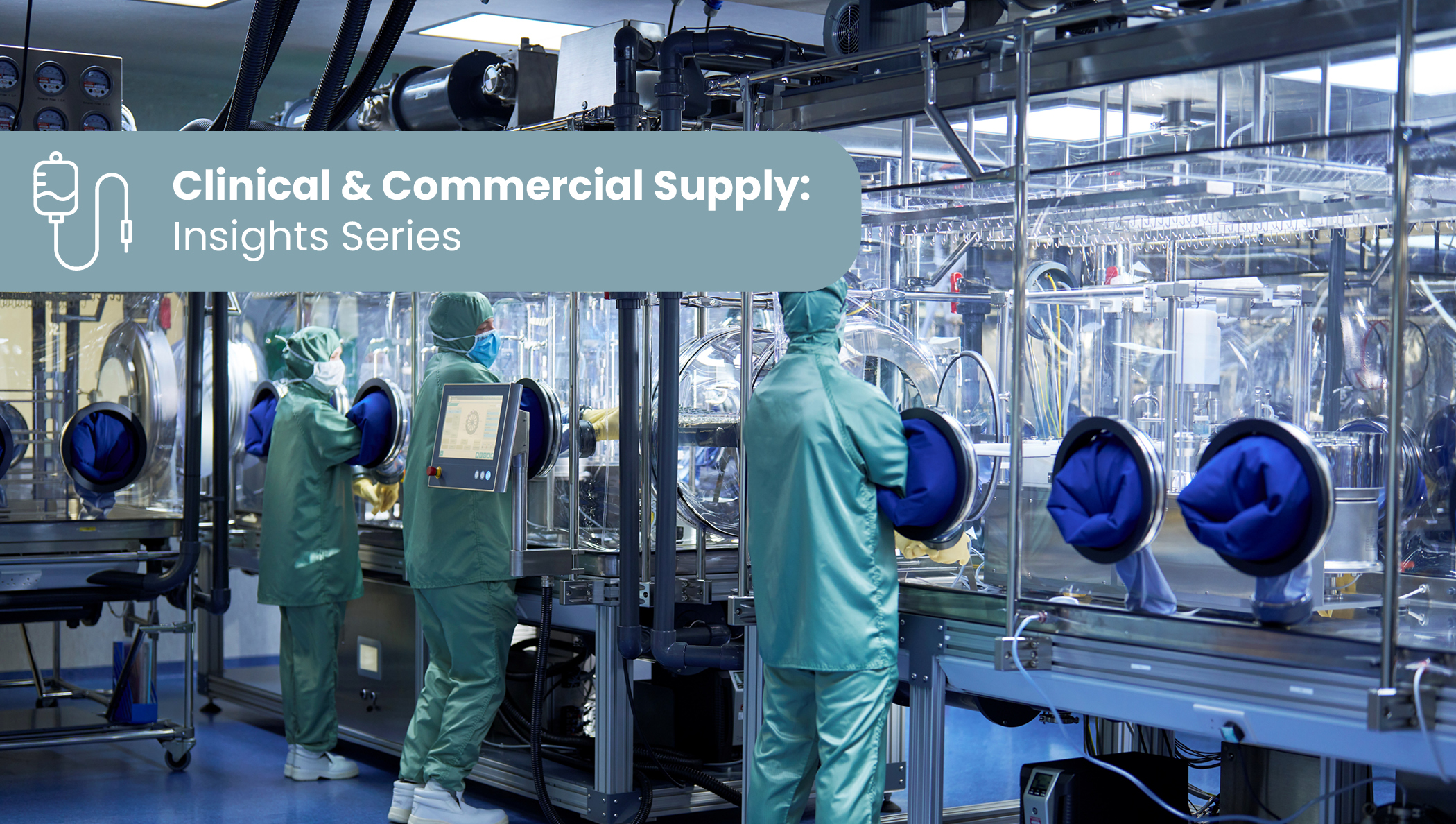
In this interview, Simon discusses the key factors that outsourcing companies should consider when selecting a sterile manufacturing partner; explaining how technical innovation, sterility assurance and long-term collaboration underpin successful product delivery.
Q: What are the most important factors outsourcers should assess when selecting a sterile manufacturing partner?
A: Outsourcers should adopt a risk-based approach when evaluating potential manufacturing partners. The selection process should go beyond basic capability assessments and focus on identifying a partner that can consistently deliver quality outcomes while effectively managing technical and operational challenges.
Key considerations include:
Demonstrated expertise in aseptic manufacturing
A strong regulatory inspection history
Experience with similar product types and a history of successful delivery
Evidence of innovation, process flexibility and problem-solving capability
It is equally important to understand how a partner deals with technical challenges. Successful manufacture is not only about executing a known process; it is also about adapting and innovating when issues arise. Bringing a product to market inevitably involves obstacles along the way. In our experience, the most successful projects are built on close collaboration between the client and manufacturer, with both parties working together to establish trust, overcome technical barriers and achieve long-term success.
Q: How should companies evaluate sterility assurance beyond standard compliance metrics?
A: Compliance is only the baseline. Outsourcers should look for evidence of consistency over time, which is a much stronger indicator of robustness.
Areas to assess include:
Media Fill performance and Environmental Monitoring data over an extended period
The effectiveness of a site’s Contamination Control Strategy (CCS)
Assessment of the sterilisation processes and embedded safety margins
At Nova, we have completed more than three million units across a range of complex aseptic process simulations without a single sterility failure. This achievement reflects both the strength of our systems and the quality culture behind them.
Similarly, in our dedicated live biologics facility, no contamination growth has ever been detected within our Grade A (Class 100) isolators since the facility commenced operations in 2010. Results such as these provide meaningful evidence of sustained process control and effective sterility assurance.
Q: How can outsourcing teams assess a partner’s ability to handle technically challenging or novel products?
A: This is an important question, particularly for advanced therapies involving technical challenges that may not have been encountered before. When assessing potential partners, organisations should consider:
Experience supporting industry-first products
Demonstrated process development expertise, particularly for complex formulations and manufacturing processes
Access to multidisciplinary expertise, including formulation, engineering and analytical capabilities
Client testimonials and evidence of successful project outcomes
At Nova, we have supported several industry-leading milestones, including the first FDA-approval of a CAR-T Therapy, the first FDA approval of an AAV gene therapy, plus the first FDA approved aseptically spray dried biologic. Each of these programmes required the development of entirely new manufacturing approaches, demanding innovation, adaptability and close client collaboration. We are proud that our technical expertise has helped bring these pioneering therapies to patients.
Prospective clients should also ask how a partner manages uncertainty and risk mitigation. Novel therapies inevitably introduce unforeseen challenges, making resilience, flexibility and problem-solving capability essential attributes. At Nova, we view these challenges as an expected part of the journey and, ultimately, a key element of every success story.
Q: Nova is recognised for its engineering capabilities. Why is this important for outsourcing partners?
A: Engineering capability is often overlooked during vendor selection, yet it can be a major differentiator and forms a fundamental element of Nova’s sterile CMO offering.
Many CDMOs depend heavily on standard equipment from external suppliers, which can limit flexibility and create procurement delays. Nova has invested heavily in engineering design and fabrication capability. Our dedicated engineering team designs and builds our own isolator systems, automated fill finish systems and custom production equipment, while our rapid prototyping and fabrication capabilities allow us to develop bespoke equipment solutions quickly and efficiently.
This approach offers several advantages:
Replacement parts can be fabricated in as little as 24 hours from a CAD drawing
Reduced dependency on external suppliers, with significantly shorter lead times
More than 30 years of engineering experience, enabling complex challenges to be resolved rapidly and effectively
This level of in-house engineering capability also extends to cleanroom facility design and construction. By designing and building our own cleanrooms, including detailed elements such as cleanroom doors and windows, Nova maintains tighter control over facility performance, process integration and project timelines. This depth of control demonstrates the level of consideration applied across the entire manufacturing environment, from equipment design through to the cleanroom infrastructure that supports it.
With advanced therapies, processes are rarely “standard”, and this bespoke approach is extremely valuable.
Q: What role does isolator technology play in modern aseptic manufacturing?
A: Isolator technology and design form the foundation of sterile manufacturing. Here at Nova, we developed our bespoke flexi-walled, high integrity gassed isolator systems in the 1990s, specifically designed for complex processes providing a Grade A environment for sterile manufacturing operations.
These systems are especially important when integrating novel processes, such as handling sensitive biological materials or performing aseptic spray drying.
Today, we are operating our sixth-generation isolator platform, which builds on more than 30 years of operational knowledge. Our latest systems incorporate fully automated robotic fill-finish technology for Advanced Therapy Medicinal Product (ATMP) manufacturing within a new state of the art facility. Having an engineering team within Nova allows a very close collaboration with production teams, a unique benefit few other manufacturers have.
The ability to continuously improve each new generation of filling line, while adapting to ever-changing regulatory expectations, demonstrates both our agility and commitment to innovation. This ongoing evolution ensures that our manufacturing infrastructure remains aligned with the changing needs of advanced therapy clients and the patients they serve.
Q: How can outsourcers evaluate scalability and long-term manufacturing fit?
A: Scalability is often overlooked during the early stages of development, but it can become a major risk later.
Outsourcers should ask:
Can this partner support both clinical and commercial volumes?
What scale-up strategies and timelines are in place?
Will a future tech transfer be required, and what are risks could this introduce?
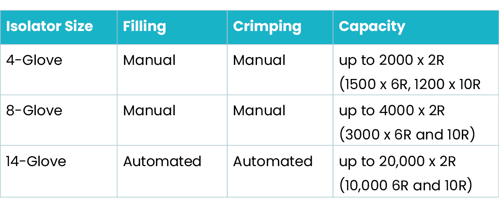
At Nova, we support projects from small, hand-filled clinical batches through to automated commercial production runs of up to 20,000 vials. This enables clients to maintain continuity throughout development and avoid the cost, complexity and risk associated with changing manufacturing partners as demand grows.
Our isolator technology has evolved significantly over the past three decades, resulting in a portfolio that supports a wide range of batch sizes and manufacturing requirements. This includes small-scale four-glove isolators for early-stage clinical manufacturing, through to our latest fifth- and sixth-generation isolator platforms, which incorporate advanced automation and robotic fill-finish capabilities. This breadth of capability allows us to provide scalable manufacturing solutions that grow alongside our clients' programmes.
Below is a snapshot of the sterile fill-finish scales that Nova can accommodate.
Q: Nova has developed a cGMP aseptic spray dryer. What advantages does this offer to clients?
A: One of Nova’s most notable achievements is the development of the world’s first fully validated cGMP aseptic spray dryer approved by both the EMA and FDA. Unlike lyophilisation, aseptic spray drying is a continuous manufacturing process that offers straightforward scalability and greater production flexibility. The technology also enables precise particle engineering, making aseptic spray drying a key platform for advanced drug delivery systems. This is particularly valuable for injectable suspensions, which require highly concentrated biologic formulations dispersed within a non-aqueous medium.
Additional benefits of using spray drying over other manufacturing technologies:
Precise control over particle size and morphology
Enhanced powder flowability and improved reconstitution performance
High product yields and compatibility with continuous manufacturing
Greater flexibility in drug product design through particle engineering
The ability to incorporate drug-loaded particles into a wide range of delivery device formats
These capabilities position aseptic spray drying as a transformative technology for the development and commercial manufacture of next-generation biopharmaceutical products.
Q: How important is communication and project governance in outsourcing relationships?
A: It’s absolutely critical. Even with strong technical capability, projects can struggle if communication is not structured and transparent.
Prospective clients should look for:
Clear project timelines, milestones and deliverables
Designated points of contact with agreed escalation pathways
Regular, data-driven progress updates at key time-points
Nova offer single point of contact project leads, who are all qualified in aseptic processing and oversee the batch manufacture. This ‘hands on’ approach is unique and greatly appreciated by our clients, who require regular updates of the project progress. We ensure that end-to-end project management is provided, from early development through to regulatory submission and commercialisation.
Q: What are the key regulatory considerations outsourcers should keep in mind?
A: Regulatory expectations for sterile products are particularly stringent. Outsourcers should evaluate:
A partner’s inspection history with agencies such as the FDA, EMA and MHRA
Their experience with regulatory submissions
Robust quality systems and GMP compliance across sterile manufacturing operations
Understanding of advanced therapy-specific requirements, including contamination control and product-specific risk management
At Nova, we actively support clients with regulatory strategy and submission activities, helping to ensure a smooth pathway towards approval. Nova has been audited by the MHRA, FDA, (including CBER, CDER and CDRH), ANVISA, PMDA and MFDS. We also hold ISO 13485:2016 certification and a Home Office Controlled Drugs Licence.
Q: What role does digital technology play in modern facility design and process optimisation?
A: Digital tools are becoming increasingly important, particularly for complex builds.
At Nova, we use the latest CAD tools and Virtual Reality (VR) to visualise equipment and facilities in 3D before construction begins. The importance of CFD for the modelling of airflows within isolators and spray dryers is increasing, especially with the airflow visualisation requirements of Annex 1.
This allows:
Early client engagement and feedback
Identification of potential design or workflow issues
More efficient and optimised facility layouts
21CFR compliant data logging of batch parameters
For outsourcers, this level of transparency can significantly reduce risk during project setup.
Q: What should companies look for in a long-term sterile manufacturing partner?
A: Outsourcing should always be viewed as a strategic partnership rather than a transactional service.
Key attributes include:
A collaborative mindset aligned with the client’s goals
A willingness to invest in solving complex technical challenges
Long-term consistency and reliability
Agility and flexibility in responding to changing project needs
With more than 30 years of experience in sterile manufacturing and multiple commercial products, we have built long-term partnerships by focusing on these principles. For us, successful projects are built on trust, open communication and a shared commitment to overcoming challenges together.
As clinical manufacturing is our core business, we understand that client requirements can change at short notice. That's why we work hard to remain responsive and flexible, helping clients identify alternative solutions and access suitable manufacturing slots when timelines shift. We see adaptability as an essential part of being a trusted long-term partner and helping clients keep their programmes moving forward.
Conclusion
The increasing complexity of advanced therapies is reshaping how outsourcing partners are selected and evaluated. Beyond basic capability, companies must assess technical depth, engineering flexibility, sterility assurance, scalability, and collaborative approach.
Nova Laboratories’ experience — spanning pioneering therapies, innovative aseptic technologies, and a strong regulatory track record — provides a clear illustration of what a specialist sterile manufacturing partner can offer.
For outsourcing teams, the key takeaway is clear: asking the right questions early can significantly reduce risk and set the foundation for long-term success.
Summary of Nova Laboratories
Nova Laboratories is a UK-based specialist in complex sterile manufacturing. Established in 1994, Nova has built a reputation as a trusted partner for projects where terminal sterilisation is not an option, supporting clients from early development through to commercial supply. At the heart of Nova’s success is its commitment to innovation. By combining scientific know-how with unique in-house engineering capabilities, Nova has continuously pushed the boundaries of what is possible in aseptic processing.
Today, Nova supports five commercial products within its sterile manufacturing portfolio, reflecting long-standing and trusted client collaborations. The company is particularly proud of its involvement in several industry firsts, including the first FDA-approval of a CAR-T Therapy, first FDA approval of an AAV gene therapy, and the first FDA approved aseptically spray dried biologic.
With more than 30 years of experience, an exceptional sterility assurance track record, and a long history of supporting pioneering products, Nova Laboratories continues to be a partner of choice for companies developing complex sterile therapies. By uniting scientific expertise, engineering innovation, and a collaborative mindset, Nova supports clients at every stage of the product lifecycle – from initial concept through to commercialisation - helping bring critical medicines safely and efficiently to patients worldwide.
In 2026 Nova entered an exciting new phase when it announced it would build a new commercial ATMP facility with 4 fully automated filling lines. Construction is already underway for this new facility which will supplement our existing gene therapy facility and will deliver high quality gene therapies to meet unmet medical need.